
“Wuthering Heights” – Movie Review
If Emerald Fennell’s previous film, Saltburn, and the statement-made quotation marks around this film’s title, “Wuthering Heights”, aren’t enough of an indicator for you that this adaptation of Emily Bronte’s renowned and beloved novel about longing and desire is going to wildly detour itself from the original source material, then the film’s opening scene involving climatic, sexual sounds playing over the title cards that then bait-and-switch the audience into watching a man (with an erection) being hung (not that kind) should do the job!
Starring Margot Robbie as Catherine and Jacob Elordi as Heathcliffe, Fennell takes the core foundations of one of history’s greatest love stories, and gives the period-era romance a deranged, sexually charged, and modern twist that will surely cause a stir with the novel purists, but is undoubtedly a visually entrancing, melodramatic affair that seems to pay out on the tropes of the genre with its tone, whilst still maintaining a sincere, desire-filled longing that makes the on screen romance feel quite palpable and electric.
Meeting as children, Catherine (played younger by Charlotte Mellington), who lives with her father in the wealthy, gothic estate of Wuthering Heights, and Heathcliffe (played younger by Owen Cooper), rescued from the streets of Liverpool, strike up a close friendship, with their connection fuelled by the fact that Catherine’s brother died and he desire to feel that love once more.
As Catherine and Heathcliffe grow up in the estate together, Heathcliffe works at Wuthering Heights, while Catherine soon plans to marry Edgar Linton (Shazad Latif), a wealthy estate owner, in order to escape the dilapidated state that her father’s (Martin Clunes) alcoholism has caused the estate to fall into. Emotionally pained by Catherine’s decision, Heathcliffe leaves Wuthering Heights, only to return years later as a member of high-society himself, finding Catherine pregnant, and their desire for each other taking a toxic, degrading turn.


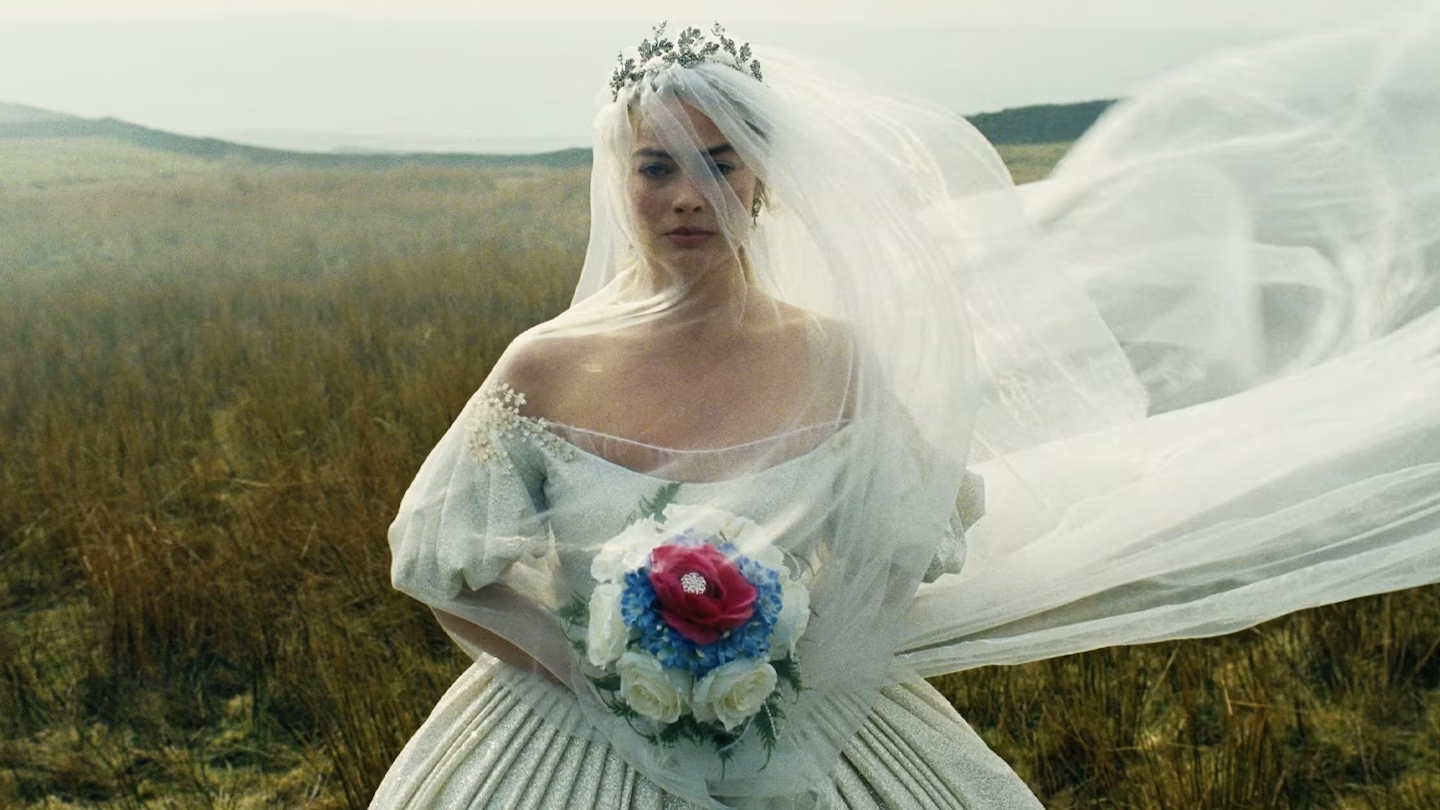
“Wuthering Heights” is very much a movie of two halves. The first being the more traditionally structured, period-era romances, where the story grows this palpable longing between Catherine and Heathcliffe, whose each denial of that love creates that frustrating, but undeniably engaging, feeling for the audience in rooting for the characters to just get together already. With Robbie and Elordi, both unbelievably attractive with chemistry to boot, leaning into that tone with a good dash of over-the-top melodrama that feels far more entertaining and slightly comedic, rather than the more potentially pretentious route it could have taken in adaptation.
During the first half, Fennell also adds a little more complexity to the romantic sheen with characters like Nelly (Hong Chau), Catherine’s (paid for) companion, and Isabella (Alison Oliver), Linton’s live-in ward, who bring intriguing and unique layers of tension to the relationship that develops between Catherine and Heathcliffe, but also the relationships that Catherine specifically has with these two characters in the story’s first half, and then how that develops in a very confronting and interesting way between Heathcliffe and Isabella in the film’s more abrasive and degrading second half (where more of that Saltburn energy comes to play). It’s also worth pointing out that during the film’s first half, Alison Oliver and Martin Clunes performances bring a very comedic nature to the overall tone, with Mr. Earnshaw’s drunken ramblings and general disapproval leading to some incredibly uncouth one-liners, and Isabella’s flighty energy, particularly in a scene where she describes the plot of Romeo and Juliet in chaotic fashion. Oliver also ends up being one of the film’s standout roles in the second half.
It’s during the film’s second half where the most divisive opinions about whether “Wuthering Heights” will work for you will be found. Fennell doesn’t necessarily go exceedingly explicit with the sexual overtones, but she does explore degradation and revenge in darkly sexual ways. There is an icky goo-iness, both literally and psychologically, that Fennell brings to the table that will make audiences be simultaneously disgusted by the way sex is used, but also not be able to look away from how it’s portrayed. And it’s in these moments where if the story has been consumed in a more comedic way, then it’s wickedly fun. If not, then it may feel like a wild tonal shift that makes the last hour feel like a slog to get through. It will absolutely come down to a matter of preference, and whether you will let Fennell just take you on the ride.
Outside of the divisive story elements, “Wuthering Heights” is a technically wonderful movie. The jaw-dropping, 35mm cinematography captures the gothic cliffside scenery and epic scaled set design in such an immersive and beautiful fashion. Fennell’s ability to convey feeling through the visuals is quite visceral, especially the way she uses extreme close ups of characters and items to inject the audience into the frame, almost in a complicit manner. Anthony Willis’ grandiose score, and the sporadic but effective use of some original songs from Charl XCX, also work to create a brooding and sweeping atmosphere.
“Wuthering Heights” is not the Bronte adaptation you should expect from Emerald Fennell, and nor should it be. Purists and lovers of the source material may still find themselves swept up in the longing that Robbie and Elordi achingly bring to the screen, but if you lean into the melodrama and degradation kink that Fennell injects into the film’s second half, there is a lot of wicked fun to be had, without losing that toxic romantic foundation of the novel.

“Wuthering Heights” is in Australian cinemas February 12


