
The Weight – Movie Review
There was a time when Hollywood regularly produced rugged, mid-budget dramas aimed squarely at adults that were built around compelling characters, tangible stakes, practical action, and stories that trusted audiences to lean in rather and listen rather than lean back and be overwhelmed by spectacle. These days, those films feel increasingly rare, squeezed out by franchise blockbusters and streaming background content, but that scarcity is part of what makes The Weight such a welcome arrival.
Set during the Great Depression, the film follows Samuel Murphy (Ethan Hawke), a devoted father fallen on hard times whose life is shattered when he is taken away from his daughter and imprisoned in a brutal prison labour camp run by Warden Clancy (Russell Crowe). But seeing the heart of Murphy, Clancy offers him a slim chance at freedom, tasking him with a high-stakes proposition: smuggle gold out of a remote mine with a dangerous crew of prisoners and he’ll win his freedom. The ensuing scheme embroils him into a tense survival situation where grit and wit combined will provide the only path to freedom.
What follows is a lean survival drama that understands exactly what it wants to be as it embraces a timeless storytelling formula. A fundamentally good man is torn away from his family and forced into circumstances beyond his control. Every obstacle, every injury, every setback carries emotional weight because the audience understands exactly what is driving him forward. Murphy is not chasing treasure, glory, or revenge. He simply wants to get home.


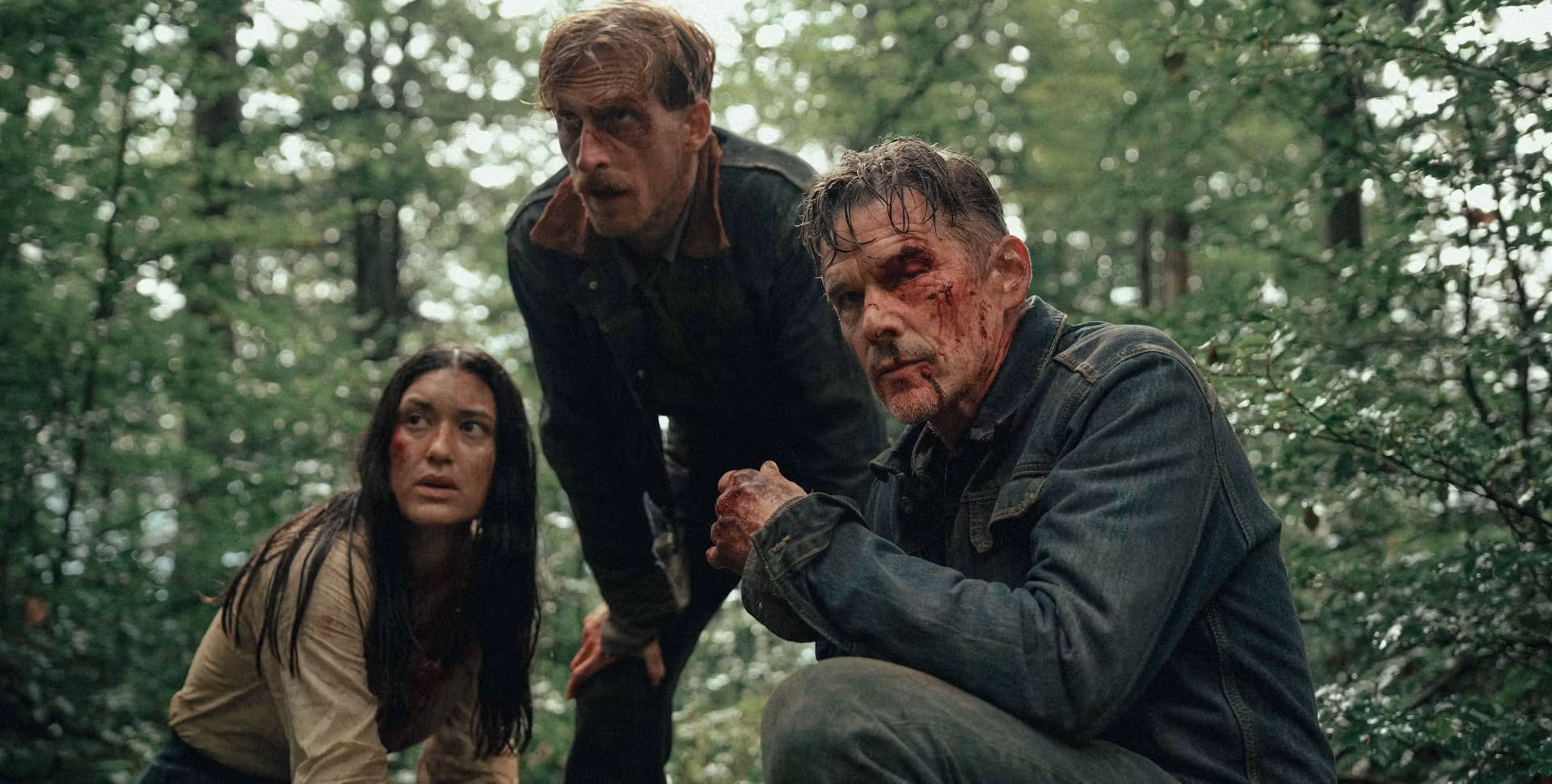
Ethan Hawke is the perfect everyman actor for this kind of story, capable of communicating exhaustion, determination, and vulnerability whether in dialogue or body language. His performance here is wonderfully grounded, with Murphy feeling less like an action hero and more like an ordinary man enduring extraordinary hardship. And speaking of quiet, rugged resolve, Julia Jones is particularly memorable as Anna, an Indigenous runaway whose resilience and sharp wit make her one of the film’s most compelling presences. Jones delivers some of the film’s strongest dramatic moments with remarkable restraint, revealing layers of pain and perseverance without ever overplaying them. Further highlights include Austin Amelio’s Rankin and Avi Nash’s Singh who with the rest of the ensemble bring a weathered authenticity to the journey. Nobody looks like a polished movie star by the final act; they appear bruised, battered, exhausted, and utterly committed to surviving one more day. Together, the cast gives The Weight its rugged soul, transforming what could have been a straightforward survival crime thriller into a story populated by characters who feel genuinely lived-in and hard-won.
In his directorial debut, Padraic McKinley complements their performances with bare-kuckled confident filmmaking. Every camera angle, cut, shot, and decision feels deliberate. The film never sensationalises its subjects, instead allowing audiences to feel the cumulative toll that survival takes on both body and spirit. The craftsmanship is particularly impressive during the film’s action sequences. Whenever a vehicle enters the frame or Murphy’s life hangs in the balance, the tension noticeably ratchets upward as the stakes feel genuine, and the technical execution becomes even more apparent. Additionally, the cinematography, editing, and sound design all combine to create memorable moments that are gripping without ever feeling excessive.
However, the pacing does occasionally falter and after a sharp and engaging opening, parts of the middle act meander more than they should, causing the film to lose some momentum. Thankfully, even when the narrative drifts, the combination of strong ensemble performances and consistently impressive visual storytelling keeps things compelling, and the film does find its footing again by the final stretch, building towards a satisfying conclusion with renewed energy and purpose that leaves the film finishing considerably stronger than its midsection suggests, and in a delightfully old-fashioned flourish, the end credits feature sitcom-style cast introductions, with each actor appearing alongside a “STAR as CHARACTER” title card over B-roll footage. It’s a small touch, but one that perfectly complements the film’s throwback sensibilities, sending the audience out with a nostalgic warmth.
Solid, well-crafted, and satisfyingly old-school, The Weight reminds us how effective a straightforward survival drama can be when every hit, every choice, and every frame carries genuine heft. It doesn’t reinvent the survival genre or attempt to become the next prestige awards darling. Instead, it succeeds by executing familiar ingredients with skill, confidence, and sincerity. In an era where movies like this have become increasingly uncommon, that’s more than enough to commend and recommend the film by.

The Weight is in Australian cinemas September 17


