
The second in a planned trilogy of “lesbian B-movies”, Honey Don’t sees filmmakers Ethan Coen and Tricia Cooke reunite with Margaret Qualley after 2024s Drive Away Dolls for another crime caper laced with sex, drugs, and the Coen Brothers’ signature style of quirky violence.
Qualley leads this story as Honey, a private investigator in Bakersfield, California, who is called to a car accident turned crime scene of which a potential client is the victim. Beginning an investigation of her own into the curious death, Honey meets police officer MG Falcone (Aubrey Plaza), who together strike up a sexually charged relationship while Honey attempts uncover a deep web of corruption and lies leading back to the local church’s Reverend (Chris Evans), who is running an illicit business of his own right out of God’s house.
“The second in a planned trilogy of lesbian B-movies”
With all the hallmarks of a 70s B-movie, including a stylistic opening credits sequence, wild twists and turns, a campy tone, Roger Corman-esque cinematography, over-the-top performances, and unapologetic sexuality, Coen and Cooke, much like they did in Drive Away Dolls, show such a reverence for this era of exploitation filmmaking, in both atmosphere and technicalities. The film is carefully crafted to not feel like an overt homage, or even parody, of 70s B-movies, with Honey Don’t feeling uniquely like Coen’s take on this genre.
Differing from the more energetic, youthful role she played in Drive Away Dolls, Qualley gets to play a far more stoic, witty character in Honey, who carefulness with her limited dialogue and concentrated stare bring a sense of confidence that is strong enough to the point that when Honey does decide to talk to someone, there is a lot of conviction behind her words, whether it’s interrogation or seduction. Honey’s personality is supposed to play into an opposites attract chemistry between Honey and the far more timid and reserved MG. But, their relationship is very much solely built on their electric sexual chemistry, which does feed into the point being made about the benefits of strictly sexual companionship, but leaves a lot to be desired when the film does include scenes of them trying to connect on a far deeper level.

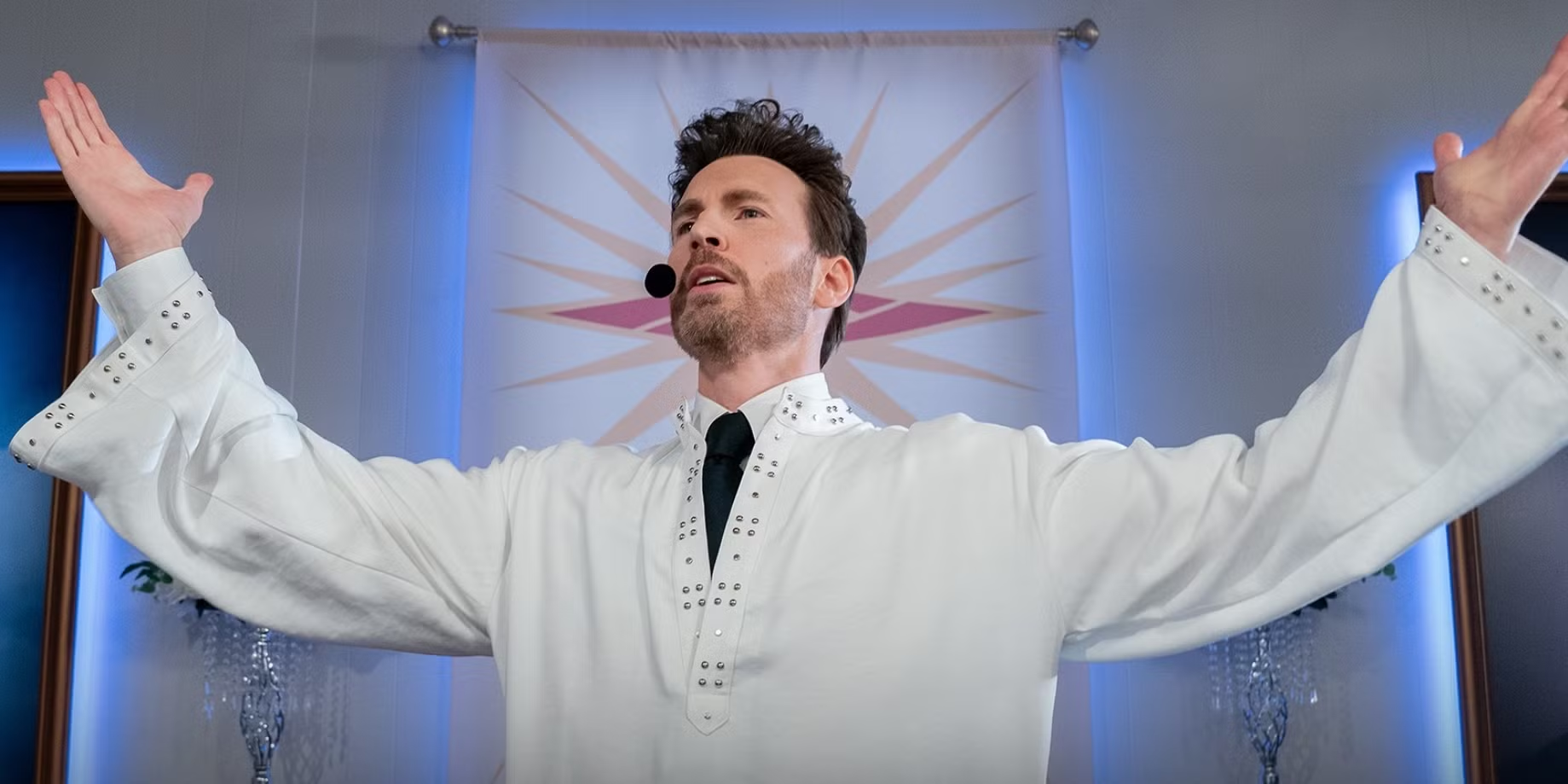

Honey’s demeanour plays off in a more humourous way with the absurd confidence of Evans’ turn as Reverend Drew, whose egotistical and cocky demeanour, highlighted in an evangelical sermon comparing sinners to macaroni, creates a villain that is a lot of fun to watch, especially because it’s such a wild left turn from the roles Evans has played before. Much like Coen and Cooke’s dig at the provocatively twisted side of politicians in Dolls, Honey Don’t is a scathing indictment on the moral corruption of influential religious leaders. It’s funny to watch, but there is also an anger that is coming through this script that hangs over the comedy too.
Clocking at 89 minutes, Honey Don’t suffers from an uninterestingly generic narrative that has a lot of moving parts that aren’t fleshed out enough, and a structure that doesn’t allow a very natural flow to those parts. There are elements of each plot thread that are interesting, but that’s mainly due to how engaging the performers are in their scenes. Honey feels like a character that could go on weekly serial adventures, but this investigation would be the most forgettable one. Reverend Drew is so diabolically corrupt, but there isn’t enough backstory about how he got into his double life. By the time the film reaches its climax, it felt like there could’ve been 20 more minutes of story to more neatly wrap things up.
While the aesthetic, performances and tone of Honey Don’t successfully lean into its homage to 70s, lesbian, B-movies, the disjointed and underwhelming story leaves a lot to be desired under the surface.

Honey Don’t is in Australian cinemas August 28.


